
What Is Tuckpointing, and When Does a Brick Home Need It?
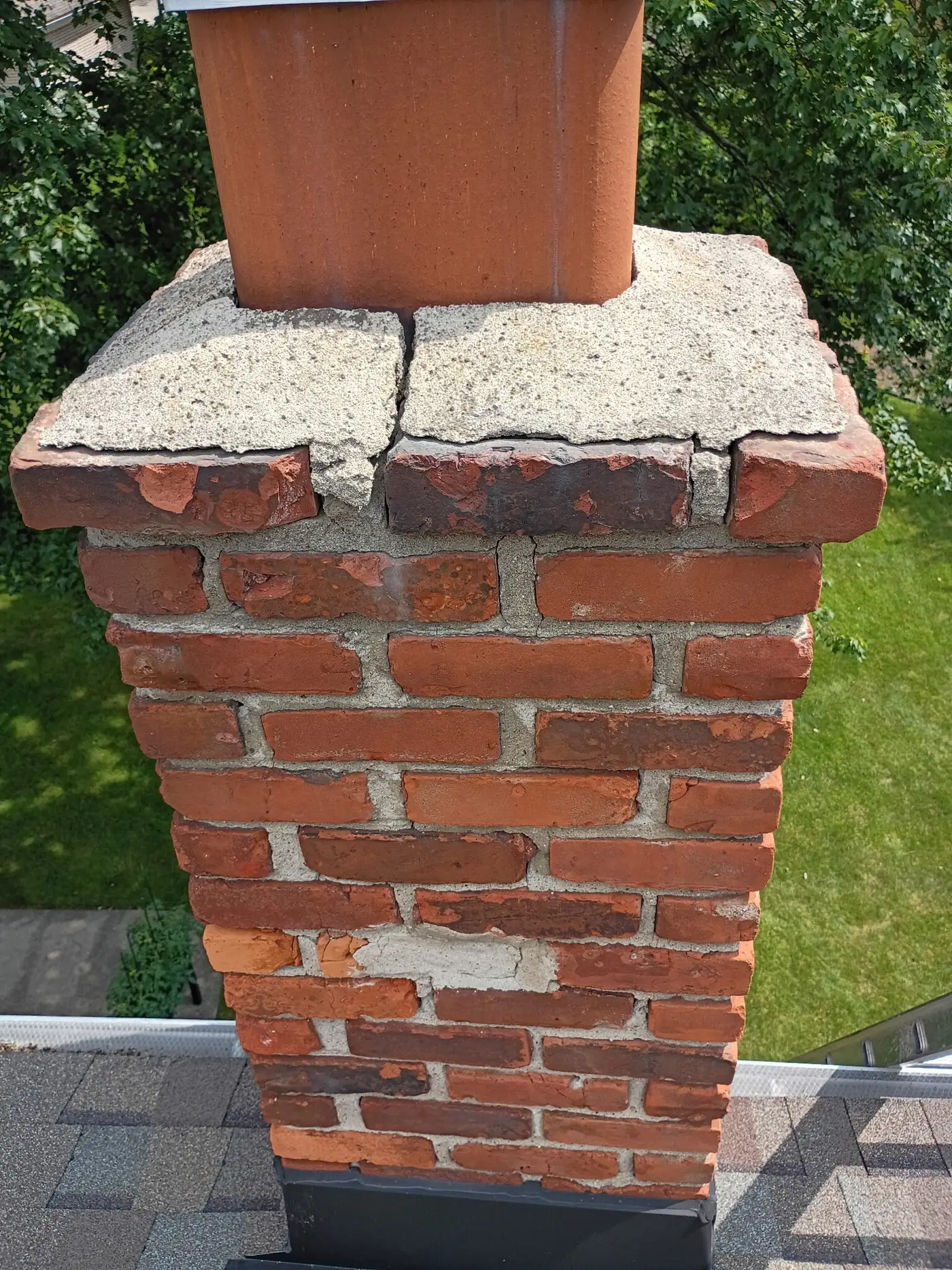
Short answer: tuckpointing means grinding out worn or crumbling mortar between bricks and packing the joints with fresh mortar. A brick home or chimney needs it when the mortar is cracked, sandy, crumbling or sunken back from the face of the brick. Fixing the joints early keeps water out and can save the brick itself, which is much harder and more costly to replace.
What Tuckpointing Is, in Plain Words
Brick walls and chimneys are held together by mortar. Over time, rain, sun and freezing weather wear the mortar down faster than the brick. Tuckpointing, also called repointing, is the repair for that.
- Grind out. The old, weak mortar is removed from the joints to a set depth with grinders and hand tools.
- Clean. Dust and loose bits are brushed or blown out so the new mortar can bond.
- Repoint. Fresh mortar is packed into the joints in layers.
- Tool. Once the mortar firms up, each joint is shaped so it sheds water and matches the rest of the wall.
Strictly speaking, tuckpointing is a style that uses two mortar colors to make joints look thin and sharp. Today most people, and most contractors, use the word for any mortar joint repair.
Signs Your Brick or Chimney Needs Tuckpointing
You can spot most problems from the ground with a pair of binoculars, or up close on walls you can reach:
- Mortar that is cracked, crumbly or turns to sand when you scratch it with a key.
- Joints that are sunken back from the face of the brick, so you can see a gap.
- Loose bricks, or bricks that move when you push on them.
- White, chalky stains on the brick, called efflorescence. It means water is moving through the wall.
- Brick faces that are flaking or popping off, called spalling.
- Damp spots, stains or peeling paint on inside walls or ceilings near a chimney.
The U.S. National Park Service, in its guide on repointing masonry, lists the same warning signs: crumbling mortar, cracked joints, loose bricks, damp walls and damaged plaster inside.
Why Michigan Winters Wear Out Mortar Faster
Southeast Michigan goes through many freeze and thaw cycles each winter. Water soaks into worn mortar, freezes, expands and pushes the joint apart. When it thaws, more water gets in. Year after year, small cracks turn into open joints and loose brick.
- Chimneys take the worst of it. They stick up above the roof with no cover, so rain, snow and wind hit all four sides.
- The chimney crown matters. The cement cap on top of the chimney sheds water. When it cracks, water runs straight into the brick and mortar below.
- Older homes show it first. Many brick ranches and colonials in Livonia, Farmington Hills and Novi have chimneys and walls that are decades old.
Why the Right Mortar Matters
New mortar should not be harder than the brick or the old mortar around it. That sounds backwards, but it is how masonry is meant to work. The Brick Industry Association says repointing mortar should be similar to or weaker in strength than the original mortar. If the new mortar is too hard, stress moves into the brick, and the brick face can crack or spall.
- Mortar is meant to be the part that wears out, because it is easier to replace than brick.
- Older homes often have softer mortar than modern mixes, so a good mason matches the mix to the house.
- Color and joint shape should match the rest of the wall so the repair blends in.
- Masonry guides call for removing old mortar to a depth of about two to two and a half times the width of the joint, so the new mortar has enough to grip.
Tuckpointing, Crown Repair or Rebuild?
Tuckpointing fixes the joints. It is not the answer for every chimney problem. Here is how the main repairs line up:
- Tuckpointing is right when the bricks are solid and the problem is worn or cracked mortar.
- Crown repair or replacement is needed when the cement cap on top is cracked or breaking up.
- Flashing repair is the fix when the leak is where the chimney meets the roof.
- A partial or full rebuild makes sense when many bricks are loose or spalling, or the chimney is leaning. Rebuilding from the roof line is common when only the top section is damaged.
Our guide on whether a chimney needs repair or a rebuild goes deeper on that choice.
When to Schedule Tuckpointing
Mortar needs mild weather to cure. Masonry guides recommend working when wall temperatures are roughly between 40 and 95 degrees Fahrenheit, out of hard sun if possible. In Southeast Michigan, that usually means spring through fall.
- If you see bad joints in late fall, get them inspected now and plan the work for the first mild stretch.
- A cap on the chimney and a sound crown help slow the damage through winter.
- Do not wait for a leak inside. By the time water shows on a ceiling, it has often been getting into the wall for a while.
As for cost, tuckpointing is priced by the size of the area, the height, how easy it is to reach, and the condition of the brick. National cost guides vary widely, so local quotes vary, and a free inspection gives you the real number.
Worried about the mortar on your chimney or brick walls? We do tuckpointing, crown repair and chimney rebuilds across Novi and nearby towns. We start with a free inspection, show you photos of what we found, and give you a free written, itemized estimate. Call (734) 427-3981 or see our chimney and masonry work.
Questions
What is tuckpointing?
Tuckpointing, also called repointing, means grinding out worn or crumbling mortar between bricks and filling the joints with fresh mortar. It keeps water out of brick walls and chimneys and helps them last longer.
How do I know if my brick needs tuckpointing?
Look for mortar that is cracked, crumbly, sandy or sunken back from the brick face, loose bricks, white chalky stains, or flaking brick. Damp spots inside near a chimney are another sign.
Is tuckpointing the same as a chimney rebuild?
No. Tuckpointing repairs the mortar joints when the bricks are still solid. A rebuild replaces brick when many are loose, spalling or the chimney is leaning.
When is the best time of year for tuckpointing in Michigan?
Spring through fall. Mortar needs mild weather to cure, and masonry guides recommend wall temperatures roughly between 40 and 95 degrees Fahrenheit.
Why should new mortar be softer than the brick?
The Brick Industry Association says repointing mortar should be similar to or weaker than the original mortar. Mortar that is too hard pushes stress into the brick, which can crack or flake the brick face.
Related: Chimney and masonry, Repairs, Chimney questions